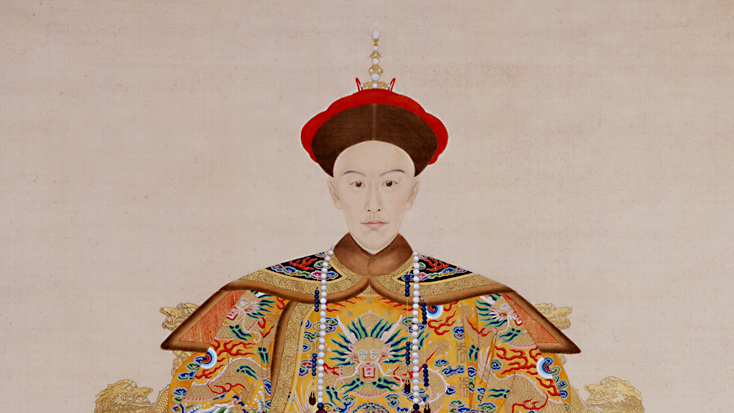
Guangxu Emperor
Introduction
The Guangxu Emperor, born as Zaitian, was the penultimate emperor of the Qing Dynasty, ruling China from 1875 to 1908. He ascended the throne at a young age following the death of the Tongzhi Emperor, and his reign is noted for attempts at modernization and reform, notably the Hundred Days' Reform, as well as the influence and control exerted by Empress Dowager Cixi. Despite his efforts to modernize China, Guangxu's reign was marred by political struggles and the eventual suppression of his reform efforts. He is interred at the Chongling, part of the Western Qing Tombs, a UNESCO World Heritage site.
Early Life and Ascension
Zaitian was born to Prince Chun, a prominent nobleman and politician, and was chosen as the heir to the throne by Empress Dowager Cixi after the death of the Tongzhi Emperor, her son. His accession to the throne as the Guangxu Emperor was marked by Cixi's continued influence over the imperial court, with her often acting as the de facto ruler until her death.
Reign and the Hundred Days' Reform
The Guangxu Emperor is perhaps best known for his role in the Hundred Days' Reform, a series of radical political, educational, and military reforms attempted in 1898. The reforms sought to modernize China's institutions and society. However, these reforms were short-lived as they were met with significant resistance from conservative factions within the government, and Cixi's intervention led to their abrupt end. The Guangxu Emperor's reformist ideas and attempts to assert his authority were largely suppressed, and he spent much of his reign under house arrest.
Influence of Empress Dowager Cixi
Empress Dowager Cixi played a significant role in the Guangxu Emperor's reign. Initially, she positioned herself as the regent due to Guangxu's young age, but her influence extended well into his adulthood. Cixi's opposition to the reforms championed by Guangxu underscored their differing visions for China's future, with Cixi favoring more traditional approaches while Guangxu sought modernization. In 1898, she effectively seized power, placing Guangxu under house arrest and curbing his authority until her death in 1908, shortly before his own.
Cultural Contributions and Photography
During Guangxu's reign, the influence of Western culture began to seep into China, a notable example being the introduction and eventual acceptance of photography. Although initially banned and considered heretical, photography was embraced by some members of the Qing court. Consort Zhen, one of Guangxu's favorite consorts, was instrumental in popularizing photography within the Forbidden City. She acquired photographic equipment and taught the emperor how to use it, demonstrating the medium's potential to capture reality. Despite cultural resistance, photography gradually gained acceptance, culminating in Empress Dowager Cixi's fascination with the art form and its eventual adoption at court.
Legacy and Death
The Guangxu Emperor's legacy is complex, characterized by his efforts to strengthen and modernize China, which were largely stifled by tradition-bound politics and the power struggles within the imperial court. His death in 1908 was shrouded in mystery, officially attributed to natural causes, but later investigations suggested he may have been poisoned, possibly to prevent him from overturning Cixi's political arrangements. The Guangxu Emperor is buried at the Western Qing Tombs, specifically at the Chongling mausoleum, which is a testament to his lasting historical significance.








